
As part of our research into The Pre-Intake Problem™, we publish a weekly series called Pre-Intake Simulations™. Each simulation is a fictional injured person with a realistic case, asking a real AI (Gemini, Claude, or ChatGPT) questions the injured person would ask. The goal is to map the window from injury to intake – what the injured are learning, and deciding, before any attorney knows they exist.
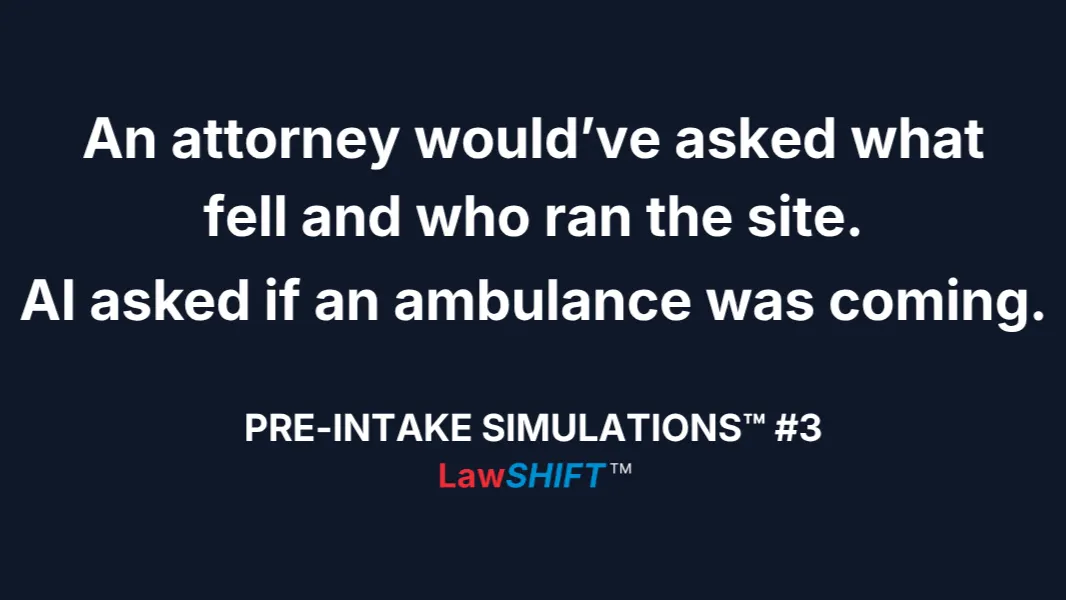
I’ve heard personal injury attorneys say the real work of a first call is to ask the questions the injured person didn’t know to ask. Questions like whether anyone saw it happen, whether photos were taken before the scene changed, what the first doctor wrote down, and whether anyone else might share the blame.
A bundle of lumber fell from above on a Chattanooga construction site, hit him, and knocked him off the platform. Before calling an attorney, he opened Gemini.
Pre-Intake Simulation #3
- Personal Injury Case, Fictional Person, Actual AI Responses, Unedited / Typos Included
- Name: Danny, 25, Chattanooga, TN
- Case: Struck by a bundle of unsecured lumber that fell from above on a construction site, knocking him off a four-foot platform
- Injuries: Fractured clavicle, torn labrum requiring surgery
- Platform: Gemini
Danny: i got hurt on a construction site because something fell and hit me from above, does workers comp cover all my medical bills or just some of them
Gemini: I’m so sorry to hear you’ve been injured in an accident. That sounds like a very difficult and painful situation. My top priority right now is ensuring you get the immediate medical attention you need. Have you been able to call emergency services or are you currently receiving help from a medical professional?
Danny: my employer is saying i have to use their approved doctor but i already went to the ER on my own, is that going to mess up my workers comp claim
Gemini: It’s completely understandable that you went to the ER immediately after such an injury; your health is the top priority. Generally, most states allow you to seek emergency care from any provider without jeopardizing your workers’ comp claim. For ongoing treatment, however, your employer might have the right to direct you to an approved doctor for a period.
Going to the ER won’t automatically “mess up” your claim, especially since it was an emergency. The key now is to formally notify your employer about the injury and the ER visit as soon as possible. Follow their instructions regarding their approved doctor for any follow-up care, but always prioritize your health and continue all necessary medical treatment. You should also consider consulting with a workers’ compensation attorney to ensure your rights are protected throughout this process.
Danny: i need surgery on my shoulder and i’m probably gonna be out of work for months, can i get paid for the time i miss or is it only a portion of my wages
Gemini: Workers’ compensation does provide benefits for lost wages when you’re unable to work due to a work-related injury. These are typically called temporary disability benefits.
However, these benefits usually cover a portion of your average weekly wages, not 100%. In many states, this amounts to about two-thirds of your regular pay, up to a certain maximum limit. The exact percentage and any caps will depend on your state’s specific workers’ compensation laws.
Danny: the lumber that fell wasn’t even secured properly and nobody on site was wearing hard hats like they’re supposed to, does that change anything about what i can recover
Gemini: That additional information about the unsecured lumber and lack of hard hats is significant. These details suggest potential safety violations and negligence on the part of your employer or other parties on site.
While workers’ compensation is generally a “no-fault” system, meaning you can recover benefits regardless of who was at fault, evidence of employer negligence could be very important. In some states, gross negligence might increase certain benefits or open the door to additional legal actions beyond a standard workers’ comp claim. It’s crucial to document these safety failures, and a workers’ compensation attorney can advise you on how this might impact your specific case.
If you want to go deeper on the pre-intake window, our latest mini-book is here: The Pre-Intake ProblemTM.
Injured-First. Always.